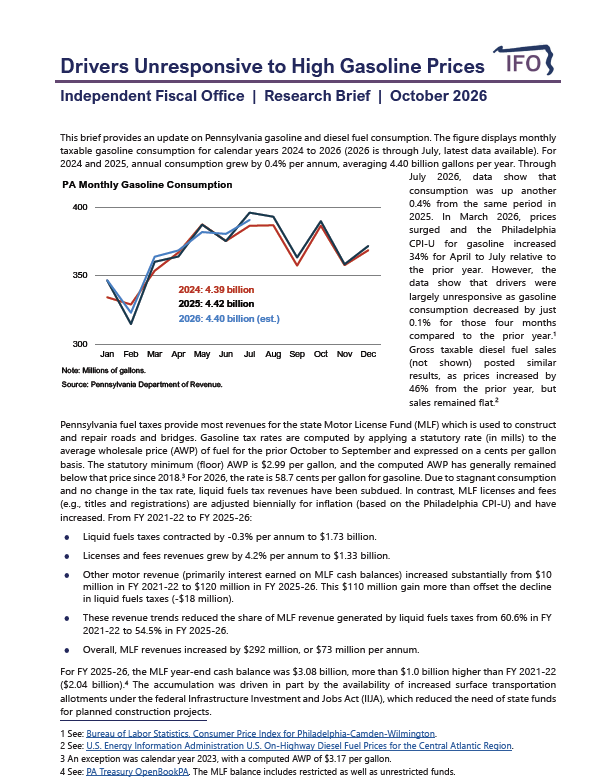
The IFO released a research brief that updates fuel consumption through July 2026. Despite a large spike in gasoline prices over the summer, Pennsylvania drivers did not reduce consumption. The brief also examines the modest contraction of fuel taxes deposited into the Motor License Fund compared to other revenue sources, such as licenses and fees.
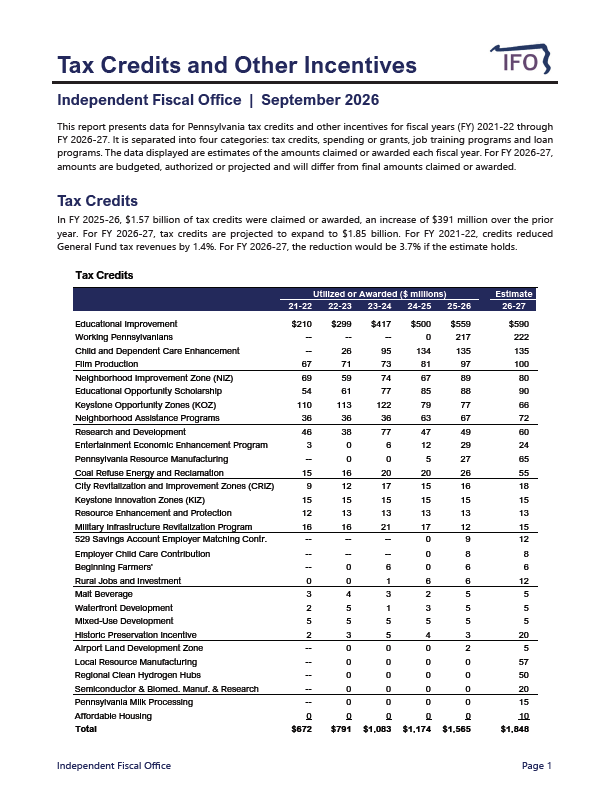
This report presents data on Pennsylvania tax credits and economic development incentives for fiscal years (FY) 2021-22 through FY 2026-27. The tables provide annual detail on tax credit utilization or awards, state spending or grants, job training programs and state loan programs. Fiscal year 2026-27 amounts are budgeted, authorized or projected and will differ from final amounts claimed or awarded. The report also highlights recent changes to incentive program spending or utilization.
This report uses data from the U.S. Census Bureau, the Internal Revenue Service (IRS), the U.S. Bureau of Economic Analysis (BEA) and other sources to facilitate a comparison of state and local tax systems across the 50 states. The report examines (1) state and local effective tax rates across states, (2) the distribution of state and local taxes across revenue sources (e.g., income, sales and property) and (3) state debt levels.

This budget brief provides data for interest earned on the General Fund and Rainy Day Fund average daily balances. It also provides estimates for FY 2026-27 and FY 2027-28.

The IFO published a budget brief that examines two provisions that convert the flat state income tax (3.07% rate) into an effectively progressive tax for lower-income filers.

The IFO published a budget brief using the latest SNAP data from June 2026. Enrollment has reverted to pre-Covid levels after a 14% contraction from the June 2024 peak.
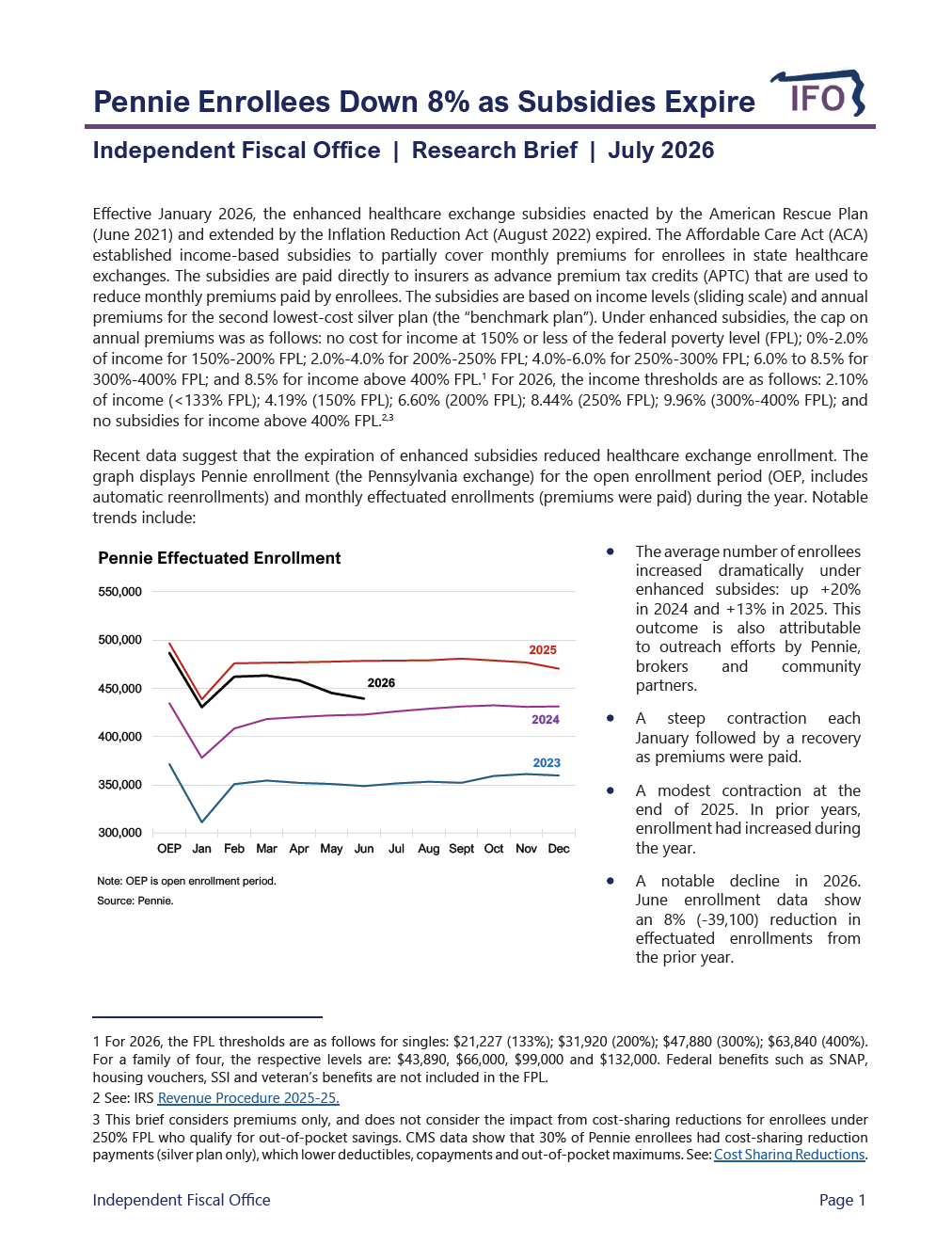
The IFO released a budget brief on trends in effectuated enrollments for the Pennsylvania healthcare exchange (Pennie).
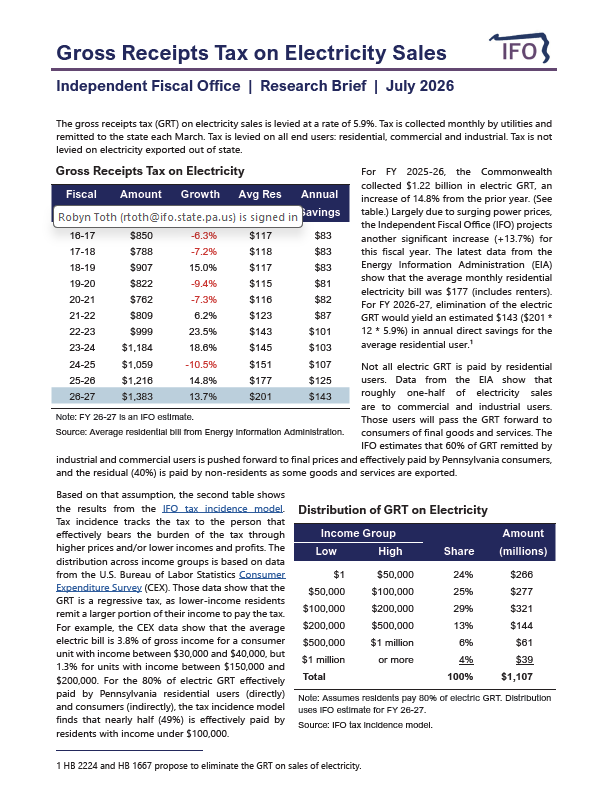
The IFO released a research brief that examines revenues from the gross receipts tax levied on sales of electricity.
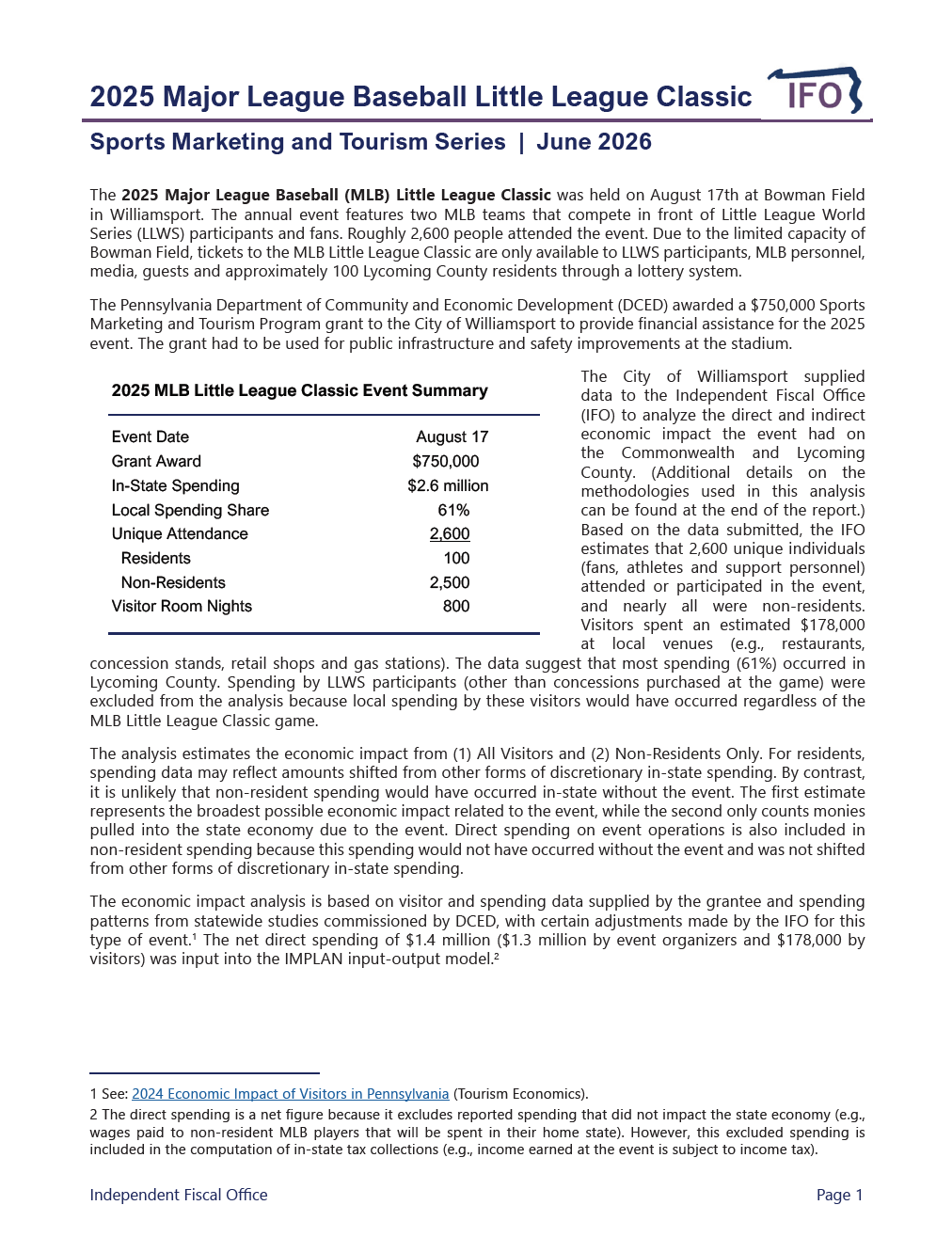
The IFO submitted an economic impact report for the Major League Baseball Little League Classic in Lycoming County (August 2025) to the General Assembly. The analysis finds that economic activity related to the event generated $2.6 million in statewide spending and $181,000 in select state and local taxes.
Director Knittel provided a Budget and Economic Update to the Pennsylvania Aggregates and Concrete Association.